

Are aluminum shower columns prone to dents?
As a supplier of Aluminum Shower Columns, I've encountered numerous inquiries from customers regarding the durability of these products, particularly about their susceptibility to dents. In this blog, I'll delve into the science behind aluminum's properties, explore the factors that influence denting, and provide insights to help you make an informed decision when choosing an aluminum shower column for your bathroom.
Understanding Aluminum's Properties
Aluminum is a lightweight, corrosion - resistant metal that has become a popular choice for shower columns due to its aesthetic appeal and cost - effectiveness. Its density is approximately 2.7 g/cm³, which is about one - third that of steel. This low density makes aluminum easy to handle during installation and reduces the overall weight of the shower column.
One of the key properties of aluminum is its malleability. Malleability refers to a material's ability to be deformed under compression without breaking. Aluminum is highly malleable, which means it can be easily shaped into various forms, such as the sleek and modern designs commonly seen in shower columns. However, this malleability also raises concerns about its resistance to dents.
Factors Affecting Dent Resistance
Alloy Composition
Aluminum is rarely used in its pure form in shower columns. Instead, it is often alloyed with other metals, such as copper, magnesium, silicon, and zinc, to enhance its strength and other properties. Different alloy compositions have different levels of hardness and dent resistance. For example, 6061 - T6 aluminum alloy is a common choice for shower columns. It has a good balance of strength, corrosion resistance, and machinability. The T6 temper indicates that the alloy has been solution heat - treated and artificially aged, which increases its hardness and strength compared to the non - heat - treated version.
Thickness of the Material
The thickness of the aluminum used in the shower column plays a crucial role in its dent resistance. A thicker walled shower column is generally more resistant to dents than a thinner one. When choosing an aluminum shower column, it's important to consider the gauge or thickness of the aluminum. A thicker gauge will provide better protection against impacts and reduce the likelihood of dents.
Surface Treatment
The surface treatment of the aluminum shower column can also affect its dent resistance. Anodizing is a common surface treatment process for aluminum. It creates a hard, protective oxide layer on the surface of the aluminum, which not only enhances its corrosion resistance but also increases its hardness. A well - anodized aluminum shower column will be more resistant to scratches and dents compared to a non - anodized one.

Real - World Scenarios and Dent Resistance
In a typical bathroom environment, the chances of a significant impact that could cause a dent in an aluminum shower column are relatively low. Most daily interactions with the shower column involve gentle contact, such as adjusting the showerhead or turning the water controls. However, there are some scenarios where the shower column may be at risk of denting.
For example, if a heavy object is accidentally dropped on the shower column, it could potentially cause a dent. Similarly, if there is rough handling during installation or moving of the bathroom fixtures, the shower column may be damaged. In these cases, the dent resistance of the aluminum shower column will depend on the factors mentioned above, such as alloy composition, thickness, and surface treatment.
Comparing Aluminum with Other Materials
When considering the dent resistance of aluminum shower columns, it's useful to compare them with shower columns made from other materials, such as stainless steel and brass.
Stainless steel is known for its high strength and excellent dent resistance. It has a higher density and hardness compared to aluminum, which means it can withstand more significant impacts without denting. However, stainless steel shower columns are generally more expensive than aluminum ones.
Brass is another popular material for shower columns. It has a classic and elegant appearance, and it is also relatively resistant to dents. Like stainless steel, brass is more expensive than aluminum. Aluminum offers a good compromise between cost and performance. It provides a reasonable level of dent resistance at a more affordable price point, making it a popular choice for many consumers.
Our Aluminum Shower Column Offerings
At our company, we offer a wide range of Aluminum Shower Column options to meet different customer needs. Our shower columns are made from high - quality aluminum alloys, ensuring a good balance of strength and durability.
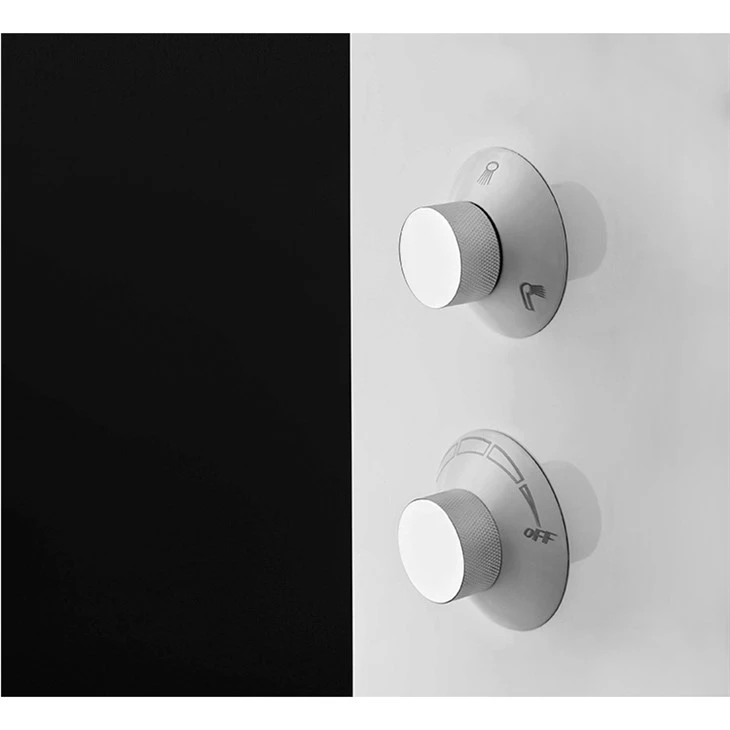
We have White Aluminum Shower Panel and Black Aluminum Shower Panel models, which not only look stylish but also offer good dent resistance. Our products undergo strict quality control measures to ensure that they meet the highest standards. The anodized surface treatment on our shower columns provides an extra layer of protection against scratches and dents, and the appropriate alloy composition and thickness are carefully selected to enhance their overall durability.
Conclusion
In conclusion, while aluminum is a malleable metal, modern aluminum shower columns are not necessarily prone to dents. With the right alloy composition, appropriate thickness, and proper surface treatment, an aluminum shower column can offer a good level of dent resistance in a typical bathroom environment.
If you're in the market for a new shower column and are considering an aluminum option, we encourage you to explore our product range. We are confident that our Aluminum Shower Columns will meet your expectations in terms of both aesthetics and durability. Whether you're a homeowner looking to upgrade your bathroom or a contractor working on a new project, we'd be delighted to discuss your requirements and help you find the perfect shower column for your needs. Feel free to reach out to us to start the procurement discussion.
References
- ASM Handbook Committee. (2000). ASM Handbook Volume 2: Properties and Selection: Nonferrous Alloys and Special - Purpose Materials. ASM International.
- Davis, J. R. (1999). Aluminum and Aluminum Alloys. ASM International.